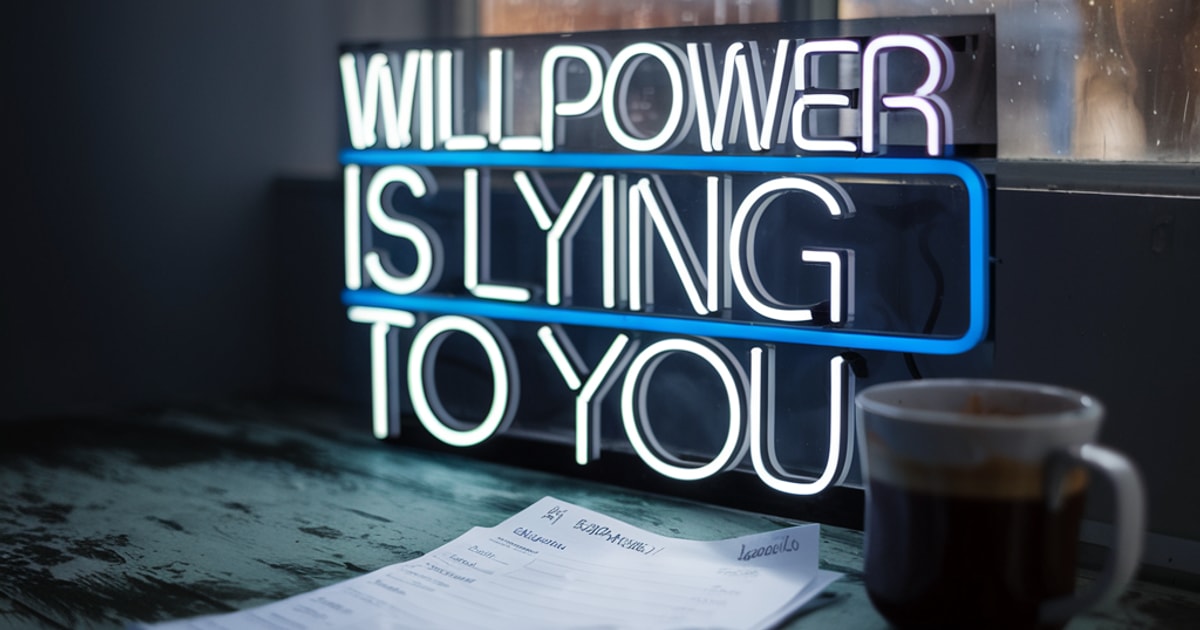
Systems Beat Willpower: The Science of Effortless Productivity
You've tried it before. Monday morning, fresh coffee, new planner. This week will be different. You'll wake up at 5 AM, hit the gym, meditate, and knock out your most important task before breakfast.
By Wednesday, you're back to snoozing the alarm and grabbing fast food on the way to work.
Here's the thing: it's not your fault. You're fighting against how your brain actually works.
Willpower is a terrible strategy for productivity. It runs out. Systems don't.
Why Willpower Fails (And Always Will)
Your willpower is like a phone battery. Every decision drains it a little. Should I check email? Skip the donut? Start that report?
By afternoon, your battery's at 15%. That's when the wheels come off.
Research shows willpower depletion is real. A 2011 study found judges grant parole 65% more often at the start of the day versus late afternoon. Same crimes, same evidence. The only difference? Decision fatigue.
Your brain takes shortcuts when it's tired. The easiest choice wins. That's why you order pizza instead of cooking. Why you scroll instead of working. Why your evening plans always sound better in the morning.
If your productivity depends on daily discipline, you're one bad day away from collapse.
What Systems Actually Do
A system removes the decision.
You don't decide to brush your teeth. You just do it. It's automatic. No willpower required.
That's what a good productivity system does - it makes the right action the path of least resistance.
Example: The Workout Problem
Willpower approach: "I'll go to the gym after work."
Reality: After 8 hours of meetings and emails, your willpower is shot. You drive past the gym. You'll go tomorrow. (You won't.)
System approach: Gym bag in the car. Gym clothes on before leaving work. Drive to gym before going home. No decision point where you can bail.
The system doesn't require discipline. It requires setup.
The Four Rules of Effortless Systems
1. Design for Your Tired Self
Your 6 AM self has energy and good intentions. Your 6 PM self is tired and wants comfort.
Build systems that work for 6 PM you.
- Don't rely on motivation. Rely on location. Put running shoes by the door.
- Don't trust future you to "remember." Set automatic reminders.
- Make bad choices harder. Delete food delivery apps. Block social media during work hours.
The harder something is to start, the less likely you'll do it. Cut every barrier you can.
2. Stack New Habits on Existing Ones
Your brain already has autopilot routines. Attach new habits to them.
After I pour my morning coffee, I review my top three tasks for the day.
After I close my laptop, I write three things that went well.
After I brush my teeth at night, I set out tomorrow's clothes.
The existing habit is the trigger. The new habit follows automatically.
No decision. No willpower. Just momentum.
3. Start Stupid Small
"I'm going to write 1,000 words every day" sounds ambitious. It's also why you quit by day three.
Start with one sentence. One push-up. One minute of deep breathing.
The point isn't the outcome. It's building the habit loop. Once the loop exists, you can scale it.
Tiny habits compound. Big commitments collapse.
4. Make Progress Visible
Your brain loves feedback. Give it some.
- Check off tasks as you finish them.
- Track streaks (even a paper calendar with X marks works).
- Keep a "done" list alongside your to-do list.
Seeing progress triggers dopamine. Dopamine makes you want to continue. The system reinforces itself.
Real Systems That Actually Work
Morning Routine (No Willpower Required)
Wake up at the same time every day (even weekends). Your body adapts. No alarm battle.
Lay out clothes the night before. No morning decisions.
First hour: no phone, no email. Coffee + deep work only. The most important task gets done before distractions start.
Email Management (Set It and Forget It)
Turn off all notifications.
Check email three times a day: 10 AM, 2 PM, 5 PM. Set calendar blocks for it.
If an email takes under 2 minutes, reply immediately. If longer, add to task list and archive it.
Your inbox doesn't control your day. Your calendar does.
Deep Work Blocks (No Discipline Needed)
Pick one 2-hour block every day for focused work. Same time, same place.
Close all tabs except what you're working on. Put phone in another room. Wear headphones (even if you're not playing music - it signals "don't interrupt").
After 2 hours, you're done. No guilt. You've already accomplished more than most people do in a full day.
The Paradox: Structure Creates Freedom
This sounds restrictive, right? Wake at the same time. Check email at set times. Follow the same routine.
But here's what actually happens: when the important stuff runs on autopilot, you stop worrying about it.
You don't waste mental energy deciding when to exercise or whether to write that report. It just happens.
And suddenly you have energy left over for the things that actually matter - creative work, time with family, solving real problems.
Discipline is choosing what to build a system around. After that, the system does the discipline for you.
Your Next Step
Pick one area where you keep failing. Just one.
Not "I'll fix my whole life." Just "I'll fix my morning routine" or "I'll fix email" or "I'll fix my workout schedule."
Build one small system. Test it for a week. Adjust what doesn't work.
Then pick the next area.
Systems beat willpower. Always have. Always will.
Stop fighting yourself. Build the system that makes productivity the default.
Share this article