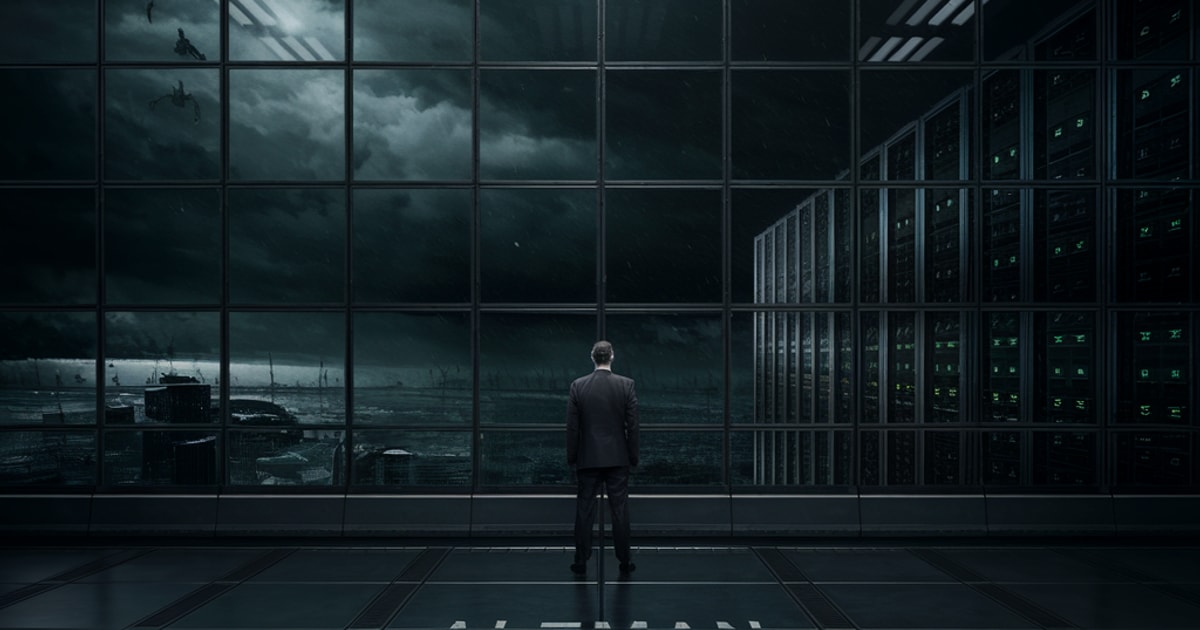
Sam Altman Just Admitted AI's Three Biggest Problems
OpenAI's CEO just said the quiet parts out loud. At a BlackRock Summit and during DC meetings today, Sam Altman made three admissions that most tech leaders won't touch: AI is unpopular with regular people, the infrastructure to run it is failing, and nobody knows what to do about the jobs it's killing.
Here's what he actually said - and what it means for you.
Problem 1: People Don't Like AI (And the Numbers Are Getting Worse)
"AI is not very popular," Altman told investors and policymakers. He's not wrong.
A new survey shows 57% of Americans believe AI's risks outweigh its benefits. That's up 13 percentage points since 2021. The more people learn about AI, the less they trust it.
The backlash isn't abstract. Data centers - the massive warehouses that power AI tools - are being blamed for rising electricity prices in states like Virginia and Texas. When your power bill goes up so ChatGPT can write emails, you start asking questions.
What this means for you: The AI honeymoon is over. Companies know the public is skeptical. Expect more regulation, more restrictions, and possibly higher costs as AI providers face pushback on infrastructure expansion. If you rely on AI tools for work, don't assume unlimited access will last forever.
Problem 2: We Don't Have Enough Power (And Nobody Knows How to Fix It)
Altman's exact words: "I am hoping for a miracle" on power buildout.
He's confident long-term that we'll solve the energy problem. Short-term? He's worried. AI models are getting bigger and more power-hungry faster than we can build the infrastructure to run them.
Every time you use ChatGPT, Claude, or Gemini, you're pulling power from data centers that consume as much electricity as small cities. Those data centers need to be built, cooled, and connected to power grids that weren't designed for this kind of load.
Right now, AI companies are racing to secure power deals and build new facilities. But construction takes years. Demand is growing in months.
What this means for you: AI tools might get slower, more expensive, or harder to access during peak times. We're already seeing some companies limit free tier usage or charge more for compute-heavy features. If Altman is "hoping for a miracle," that tells you how serious the constraint is.
The good news? Local AI models that run on your own computer are getting better fast. If cloud AI becomes unreliable or expensive, you'll have options.
Problem 3: AI Is Killing the Labor-Capital Balance (And We Have No Plan)
This is the one that matters most - and the one Altman was most direct about.
"AI has killed the labor-capital balance and nobody knows what to do about it."
For decades, the economy worked on a rough balance: workers provided labor, companies provided capital, and both sides needed each other. AI breaks that. Companies can now replace labor with capital (AI systems) at a scale and speed we've never seen.
Altman didn't offer a solution. He just acknowledged the problem is real and nobody in power has figured out how to handle it.
What this means for you: If your job involves routine tasks - writing, data entry, basic analysis, customer service, scheduling - AI is already capable of doing it. The question isn't whether AI can replace you. It's whether your company will choose to.
The answer isn't to panic. It's to position yourself for what comes next.
Three things you can do now:
- Learn to use AI tools, not compete with them. The people who keep their jobs will be the ones who can manage AI systems and do the work AI can't - judgment calls, creative strategy, relationship building.
- Build skills AI struggles with. Physical skills, face-to-face persuasion, complex problem-solving with incomplete information. AI is getting better at these, but they're still human advantages.
- Watch for the policy response. Altman's admission suggests regulation is coming. Universal basic income, job retraining programs, or restrictions on AI deployment could all be on the table. Pay attention to what your representatives are proposing.
The Bigger Picture
Altman's honesty is unusual. Most AI CEOs stick to the script: AI will create new jobs, make everyone more productive, and solve all our problems.
But behind closed doors, the people building AI are worried. They know the public is turning against it. They know the infrastructure isn't ready. They know the economic disruption is coming and nobody has a plan.
That doesn't mean AI is going away. It means the smooth rollout everyone promised isn't happening. Expect friction. Expect backlash. Expect limitations.
And expect to make choices about how you're going to navigate it.
The bottom line: AI isn't failing. But the systems around it - public trust, energy infrastructure, labor markets - are struggling to keep up. Altman just admitted what everyone suspected: the people in charge don't have all the answers.
Your move is to stop waiting for solutions from the top and start building your own strategy for what comes next.
Share this article